
High intensity supports in Ipswich for NDIS participants whose everyday care includes clinical procedures. MediHealth Connect provides complex care at home across Ipswich and Springfield: tracheostomy and ventilator support, PEG feeding, complex bowel care, catheter and stoma care, seizure management and injections, led by registered nurses.
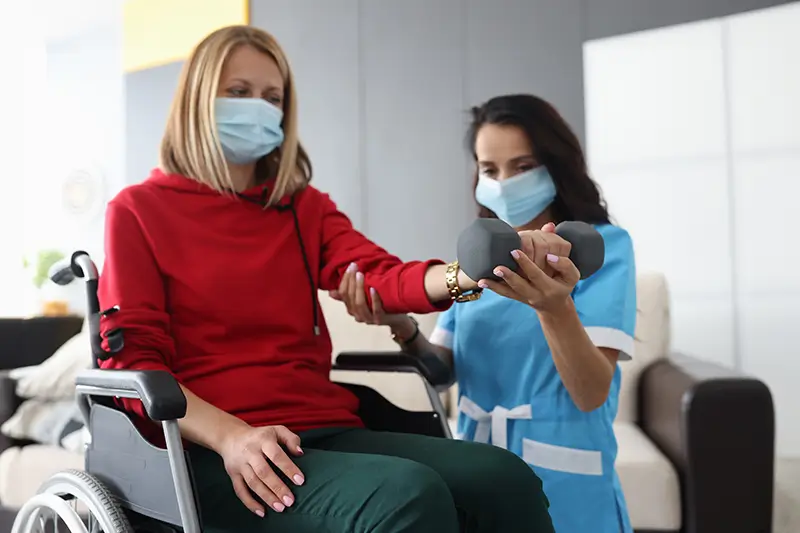
High intensity daily personal activities, or HIDPA, is the NDIS registration group for personal care that carries clinical risk. It exists because tasks like managing a tracheostomy, running a feed through a PEG tube or giving emergency seizure medication are not ordinary support work, and the person doing them needs to be trained and supervised to a standard. That standard is written into the NDIS Practice Standards as the High Intensity Support Skills Descriptors.
Each descriptor names a procedure and lists what a worker must understand and be able to demonstrate: complex bowel care, enteral feeding, severe dysphagia, tracheostomy management, ventilation, urinary catheter management, subcutaneous injections, complex wound care, diabetes management and seizure management. MediHealth Connect is registered for high intensity daily personal activities and for community nursing, so Ipswich participants can get the nursing oversight and the trained daily support from the same organisation.
All of the care below is delivered under a written plan prepared by a registered nurse and agreed with your specialists, in your own home or supported accommodation.
Day-to-day suctioning, cleaning and stoma care, humidification and an emergency response for a blocked or displaced tube that every worker on your roster has rehearsed.
Care for participants using a home ventilator, invasive or non-invasive, including circuit changes, settings confirmed against your prescription, alarm response and monitoring by staff trained on your device.
Bolus and pump feeding, flushes, tube site care and medications via the tube, following your dietitian's regime precisely. Our PEG feeding and enteral nutrition guide has more detail.
Bowel programs involving digital stimulation, suppositories or enemas, delivered on schedule and with awareness of autonomic dysreflexia where spinal cord injury is involved.
Management of indwelling and suprapubic catheters, catheter changes by a nurse, support with intermittent catheterisation and monitoring for infection. See catheter and stoma care at home.
Colostomy, ileostomy and urostomy appliance changes and skin care, with supply and product issues handled alongside your stomal therapy nurse.
Monitoring and first aid during seizures and administration of rescue medication in line with your epilepsy management plan, with each seizure recorded for your neurologist.
Insulin, anticoagulants and other subcutaneous medicines given with dose checks, site rotation and blood glucose monitoring where relevant.
Complex care in Ipswich is a team effort, but the responsibilities are not blurred. A registered nurse assesses you, writes the care plan and remains clinically accountable for it. Support workers deliver the parts of the plan that can be safely delegated.
Delegation is not casual. For each delegated task, the nurse trains the worker on your care, observes them performing it, records their competence and sets a date to reassess. The nurse reviews you on a regular cycle, is contactable by your workers throughout their shifts and resumes direct care whenever your condition changes. Tasks that stay with the nurse, such as catheter changes and ventilator adjustments, are identified in the plan so nobody has to guess.
For most Ipswich participants, complex care starts with an admission to Ipswich Hospital or another West Moreton Health service, and the risk point is the journey home. We treat discharge as a project with a plan rather than a date.
Before discharge we collect the written care plan, prescriptions and equipment list, train our staff on your specific care with the ward team where the hospital allows, and arrange consumables and equipment for the first weeks. Once you are home, your GP receives our care plan and regular updates, the hospital specialists receive the reports they ask for, and any change to your regime reaches every worker on your roster the day it is made.
We provide high intensity supports throughout Ipswich City Council's area, with nurses and support workers rostered from as close to your home as possible so that shifts are dependable and cover can be found quickly.
Central: Ipswich CBD, Booval, North Ipswich, Brassall
Greater Ipswich: Yamanto, Raceview, Silkstone
Springfield: Springfield Lakes, Augustine Heights, Brookwater
Outer: Goodna, Redbank Plains, Collingwood Park
West: Rosewood, Walloon, Marburg
Related services: community nursing in Ipswich, wound care in Ipswich and medication management in Ipswich. The high intensity supports overview describes the service across South East Queensland.
The NDIS funds high intensity daily personal activities from your Core budget at the high intensity price limits, which account for the training and nurse supervision the work requires. Nursing care is funded from Core as a disability-related health support. The NDIA will want clinical evidence, typically a specialist or hospital report that sets out each procedure, how often it is needed and the risks if it is done incorrectly.
Our nurses prepare those clinical reports, and an Ipswich support coordinator can help you use them at your next plan review or to request a variation if your needs have changed during the plan.
Any personal care task that involves a clinical procedure with real risk, as set out in the NDIS High Intensity Support Skills Descriptors. That list includes complex bowel care, enteral feeding, severe dysphagia management, tracheostomy management, ventilation, urinary catheter management, subcutaneous injections, complex wound care, diabetes management and seizure management. Providers must be registered for high intensity daily personal activities to deliver them.
Often, yes. A registered nurse trains the worker on your specific care, assesses their competence and stays responsible for supervision, and your treating team must be comfortable with the arrangement. Some tasks remain nurse-only, including catheter changes. Your care plan lists exactly which tasks are delegated and which are not.
We can arrange overnight and 24-hour care for Ipswich participants whose plans fund it, staffed by nurses and trained support workers according to the procedures involved. Because it depends on the care required and on staff availability in your area, we confirm what we can provide before any agreement is signed.
We aim to be part of the discharge planning: collecting the care plan, prescriptions and equipment list, training our staff on your care with the ward team where permitted, arranging consumables and locking in the first shifts. After discharge we keep your GP and the hospital team informed, reconcile your medications against the discharge summary and review the plan after the first week at home.
Support workers complete training aligned to the NDIS High Intensity Support Skills Descriptors for tracheostomy management and ventilation, then participant-specific training and competency assessment by a registered nurse on your equipment and care plan, with reassessment at set intervals. Our registered nurses hold current AHPRA registration and complete the same participant-specific training before joining your roster.