
Living with a catheter or a stoma is manageable at home when the routine care is done properly and someone is watching for the early signs of trouble. Here is what NDIS-funded catheter and stoma care involves, who can do which tasks, and how to get it into your plan.
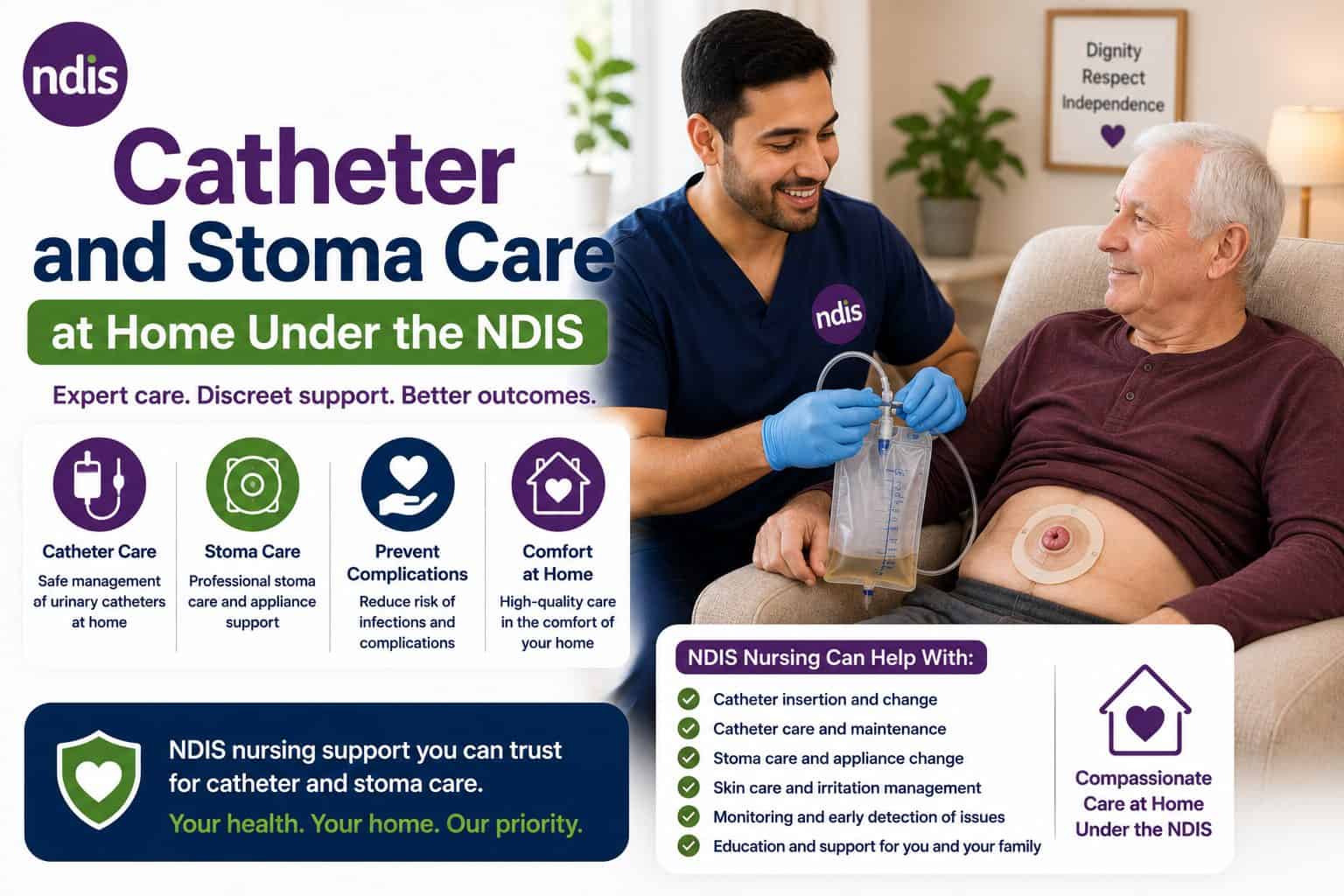
Thousands of NDIS participants manage a urinary catheter or a stoma every day, and most of the time it is uneventful. The problems come from small things done inconsistently: a bag left too full, a catheter not secured, skin around a stoma that has been irritated for a week before anyone mentions it. Catheter and stoma care at home is about making the routine reliable and catching the exceptions early. MediHealth Connect delivers this care through our high intensity supports service, and this guide explains what it looks like in practice.
Catheter care depends on the type of catheter. An indwelling urethral catheter or a suprapubic catheter stays in place and is changed on a schedule set by your urologist or continence nurse, typically every few weeks for silicone catheters. Between changes the daily work is emptying and changing drainage bags, keeping the catheter secured so it does not pull, cleaning the insertion site, maintaining fluid intake and watching for blockage, leakage, blood in the urine or signs of infection such as fever, cloudy urine or new pain.
Intermittent catheterisation is different. The catheter is passed several times a day and removed each time. Many participants do this themselves; others need a trained support worker or nurse to do it, or help with positioning and hygiene. Either way, the technique, the timing and the supplies have to be right, and a nurse should review the routine periodically.
Catheter changes for an indwelling or suprapubic catheter are performed by a registered nurse at home, which saves a trip to a clinic or, worse, an emergency department visit when a catheter blocks on a Sunday night.
A colostomy, ileostomy or urostomy needs the appliance changed regularly, the skin around the stoma protected, and the output monitored. The change itself is a practical skill: removing the old appliance without tearing the skin, cleaning and drying the peristomal skin, measuring the stoma if it is still changing size, cutting or selecting the right baseplate, and applying it so it seals. A poorly fitting appliance leaks, and leaks cause skin breakdown, which makes the next appliance fit worse.
A community nurse also keeps an eye on the things that do not show up in a routine change: a stoma that has changed colour or size, a hernia developing around it, output that has changed in volume or consistency, and supplies that are running low. Where something needs specialist input, the nurse contacts your stomal therapy nurse or surgeon rather than waiting for your next appointment.
Under the NDIS, catheter and stoma care fall under the High Intensity Support Skills Descriptors, which set out what a worker must know before performing them. In practice that produces a division of labour. Routine appliance changes, bag changes, emptying, skin care and intermittent catheterisation can be delegated to a support worker once a registered nurse has trained them on your specific care, assessed them as competent and agreed a supervision arrangement with you and your treating team.
Changing an indwelling or suprapubic catheter, managing a blocked catheter, assessing a stoma or skin problem and adjusting the care plan stay with the registered nurse. Your care plan should state clearly which tasks are delegated and which are nurse-only, so there is never any doubt on a given shift.
These supports are funded from your Core budget, as high intensity daily personal activities for the delegated daily care and as disability-related health supports for the nursing. The NDIA needs evidence: a letter from your urologist, surgeon, stomal therapy nurse or GP describing the catheter or stoma, the care required, how often, and the risks of it being done incorrectly. Consumables such as catheters, bags and appliances are usually claimed from Core as well, although some participants access them through the state continence scheme, and your nurse can tell you which applies.
If your plan does not yet fund this care, a support coordinator can help you request a plan review or variation with that evidence attached. Our nurses can write the clinical report the NDIA asks for.
A support worker can empty and change drainage bags, do site care and, with training and nurse sign-off, perform intermittent catheterisation. Changing an indwelling or suprapubic catheter is a registered nurse task.
It depends on the type of stoma, the appliance and your skin. Many participants change a one-piece appliance every one to three days and a two-piece baseplate every few days with the pouch changed more often. Your stomal therapy nurse sets the routine and our nurses follow it, adjusting only in consultation with them.
Check for kinks in the tubing and that the bag is below bladder level, and make sure you have been drinking. If it has not drained within an hour or you have pain or a distended abdomen, contact your nurse or, out of hours, seek urgent care. A blocked catheter is not something to wait on overnight.
MediHealth Connect provides community nursing across South East Queensland.