
Medication management in Ipswich and the Springfield corridor for NDIS participants, delivered at home by MediHealth Connect registered nurses and the support workers they train and supervise. Accurate charts, checked Webster packs, injections by nurses, and a direct line to your GP and pharmacist.
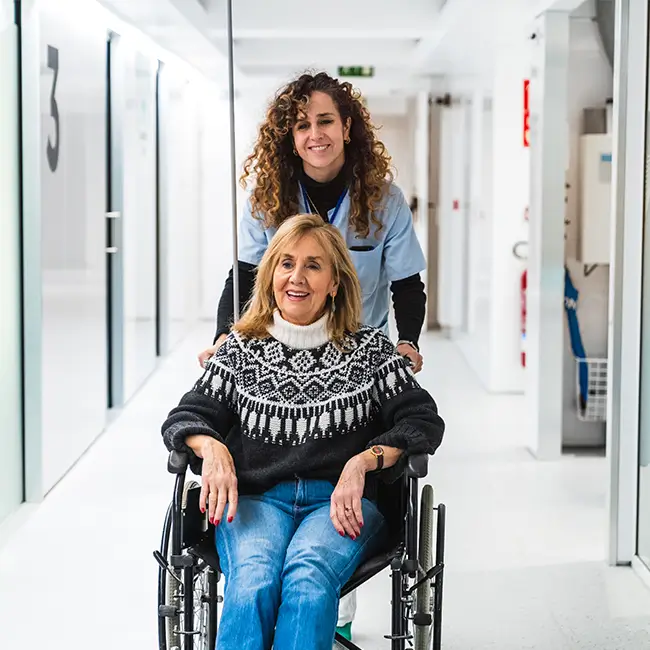
Picture a typical week for an Ipswich participant with a complex regime. Monday, the pharmacy in Booval delivers a new Webster pack. Tuesday, a specialist at Ipswich Hospital changes one dose. Wednesday, a support worker is not sure whether that change has made it into the pack. Thursday, the PRN for anxiety is given twice because two workers each thought the other had not. Nobody has done anything careless, and yet by Friday the regime is wrong.
NDIS medication support in Ipswich exists to stop that week happening. A registered nurse becomes the single point of truth for your medicines: the chart is theirs to keep accurate, the pack is checked against it, the support workers are trained by them and answer to them, and the prescribers and pharmacist hear from them whenever something changes. You choose how much support you want, from a daily prompt to full nursing management, and the same discipline sits behind all of it.
Under Queensland's Medicines and Poisons Act 2019 and the NDIS Practice Standards, medication support falls into three tiers, and each tier has rules about who can provide it.
Suits Ipswich participants who know their medicines and make their own decisions about them. The worker is there to prompt, to help with packaging and to write down that the dose was taken. Nobody else gives you anything.
Here the worker or nurse gives the dose and signs for it. A support worker can do this from a Webster pack once trained and assessed under our policy. Injections, medicines that involve a clinical decision and most Schedule 8 medicines are reserved for a registered nurse.
The full service. A registered nurse takes responsibility for the whole regime, questions what is prescribed and why, watches for side effects and interactions, keeps the chart correct, deals with your GP and pharmacist and trains the workers who administer.
Coordination with your Ipswich pharmacy so the pack matches your current scripts, a check against the chart at every visit, and prompting or administration from the pack as your plan requires.
Tablets, liquids, creams, patches, drops, inhalers and suppositories. PRN medicines are given only when the prescriber's written criteria are met, and workers are trained on those criteria before their first shift.
Registered nurses give insulin, anticoagulants, depot medications and other injections at home, verifying the dose against the prescription and monitoring blood glucose where relevant. Self-injection training is available for participants and carers who want it.
One chart, reconciled after every discharge from Ipswich Hospital or any script change, and reviews requested from your GP and pharmacist when we see duplication, interactions or a medicine that no longer seems needed.
Every safeguard in our Ipswich medication management service traces back to a real way medicines go wrong in people's homes.
Our medication management services cover Ipswich City Council's area, from the central suburbs through Springfield to the rural west. Nurses and support workers are rostered locally so that medication times are reliable.
Central: Ipswich CBD, Booval, North Ipswich, Brassall
Greater Ipswich: Yamanto, Raceview, Silkstone
Springfield: Springfield Lakes, Augustine Heights, Brookwater
Outer: Goodna, Redbank Plains, Collingwood Park
West: Rosewood, Walloon, Marburg
Medication support sits within our community nursing service in Ipswich. Where medication is part of complex care, such as PEG administration or seizure rescue medication, see our Ipswich high intensity supports. Our guide to NDIS medication management covers the fundamentals, and the medication management overview covers South East Queensland.
Support worker prompting and administration are normally funded from your Core budget as part of daily living supports. Nursing medication management in Ipswich is funded from Core as a disability-related health support when the need relates to your disability. The medicines are a PBS and Medicare cost, not an NDIS one.
If medication support is missing from your plan, the NDIA will want your GP's account of your regime and the risks of error, together with a nursing assessment, which we can provide. An Ipswich support coordinator can help you request a review or variation.
For medicines in a Webster pack or similar aid, yes, once the worker has completed our medication training and competency assessment, we hold a current chart for you and the task is within our medication policy. Injections, medicines needing a clinical judgement and most Schedule 8 medicines are given by a registered nurse.
Your pharmacy fills the pack. Our nurses check it against your current scripts and your chart, administer from it and contact the pharmacy and your GP straight away if the contents do not match.
Yes. Our registered nurses administer subcutaneous and intramuscular injections at home across Ipswich and Springfield, including insulin, anticoagulants and depot medications, as prescribed. We can also teach you or a carer to self-inject if that is a goal.
We record it, follow the prescriber's or pharmacist's advice for a missed dose of that medicine, and let you and your GP know if it is clinically important. The event is logged as a medication incident and reviewed so the cause is fixed.
Yes, where the need arises from your disability. Support worker assistance and administration are usually funded from Core as daily living supports; nursing medication management is funded from Core as a disability-related health support. The medicines themselves are covered by the PBS and Medicare.