
High intensity supports on the Gold Coast for NDIS participants whose daily care involves clinical procedures: tracheostomy and ventilator care, PEG feeding, complex bowel care, catheter and stoma care, seizure management and injections, delivered at home by registered nurses and support workers they have trained and signed off.
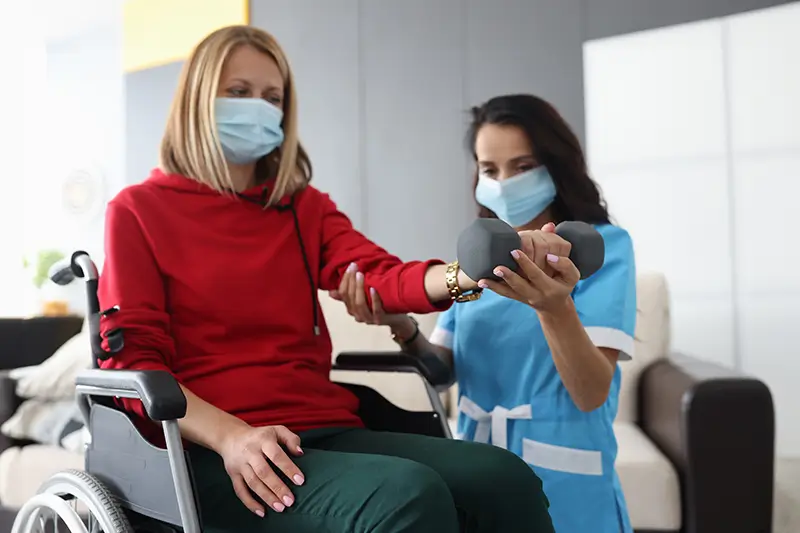
The NDIS uses the term high intensity daily personal activities, or HIDPA, for personal care that involves a clinical procedure carrying real risk if it is done wrongly. Providers who deliver it must be registered for that group and must meet the High Intensity Support Skills Descriptors in the NDIS Practice Standards, which set out the knowledge and competence a worker needs for each procedure, from complex bowel care and enteral feeding to tracheostomy management, ventilation, catheter care, subcutaneous injections and seizure management.
In plain terms, high intensity supports are the point where disability support and nursing meet. A participant on the Gold Coast may need a support worker for most of the day and a nurse for specific tasks, or a nurse for everything. MediHealth Connect is registered for both high intensity daily personal activities and community nursing, so we can build the right mix rather than forcing your needs into one category.
The procedures below are delivered in your home, in supported accommodation or in the community, according to a care plan written by a registered nurse and agreed with your treating team.
Suctioning, stoma and tube care, humidification and cuff management, with emergency tube-change readiness and a clear escalation plan agreed with your respiratory team.
Invasive and non-invasive ventilation at home, including circuit changes, settings checks against the prescription, alarm response and monitoring, with staff trained on your specific machine.
Bolus and pump feeds via PEG, PEJ or nasogastric tube, tube site care, medication administration through the tube and the dietitian's regime followed exactly. Our PEG feeding guide explains more.
Bowel management programs, including digital stimulation, suppositories and enemas, and monitoring for autonomic dysreflexia in participants with spinal cord injury.
Indwelling and suprapubic catheter changes, intermittent catheterisation, bag and valve management and infection surveillance. See our guide to catheter and stoma care at home.
Colostomy, ileostomy and urostomy appliance changes, peristomal skin care and supply management in coordination with your stomal therapy nurse.
Seizure monitoring, first aid and administration of emergency medication such as midazolam according to your epilepsy management plan, with every event recorded for your neurologist.
Insulin, anticoagulants and other subcutaneous medications, with dose checks, site rotation and blood glucose monitoring where relevant.
Some high intensity procedures are always performed by a registered nurse. Others can be delegated to a support worker once the nurse has trained them on your specific care, watched them do it and signed off their competence. Which is which depends on the procedure, your stability and what your treating team is comfortable with.
On the Gold Coast our model works like this. A registered nurse assesses you, writes the care plan and remains clinically responsible. Support workers on your roster complete the relevant High Intensity Support Skills Descriptor training, are assessed by the nurse on your care and are reassessed on a set schedule. The nurse reviews you regularly, is available to the workers by phone during shifts and steps in whenever your condition changes. Nothing is delegated that should not be.
Many high intensity participants come to us from a hospital admission, most often through Gold Coast University Hospital at Southport or Robina Hospital. A safe discharge depends on the hospital, the family and the community team all working from the same information.
Before discharge we attend or dial into the discharge planning meeting where the hospital allows, obtain the written care plan and prescriptions, arrange equipment and consumables, and complete staff training on your specific care, ideally on the ward. After discharge we keep your GP informed, send updates to the specialist teams within Gold Coast Health who follow you, and make sure any change to your regime reaches everyone on your roster the same day.
High intensity supports are delivered in the home, so the roster is built from nurses and support workers based near you. We support participants across the City of Gold Coast, including the hinterland.
North: Coomera, Pimpama, Ormeau, Helensvale, Oxenford
Central: Southport, Surfers Paradise, Ashmore, Nerang, Labrador
South: Burleigh Heads, Palm Beach, Robina, Varsity Lakes, Tugun
Hinterland: Tamborine Mountain, Canungra
Related services on the coast: community nursing on the Gold Coast for general clinical care, wound care on the Gold Coast and medication management on the Gold Coast. The high intensity supports overview covers the service across South East Queensland.
High intensity daily personal activities are funded from your Core budget, usually at the high intensity rates in the NDIS Pricing Arrangements, which recognise the additional training and supervision involved. Nursing components are funded from Core as disability-related health supports. To have these included, the NDIA needs clinical evidence: a letter or report from your specialist or hospital describing the procedures, their frequency and the risks if they are not done correctly.
Our nurses can prepare the clinical reports the NDIA asks for, and a Gold Coast support coordinator can help you take them to a plan review or request a variation if your needs have changed mid-plan.
A personal care task that involves a clinical procedure with meaningful risk, covered by the High Intensity Support Skills Descriptors: complex bowel care, enteral feeding, severe dysphagia management, tracheostomy care, ventilation, urinary catheter care, subcutaneous injections, complex wound care, diabetes management and seizure management. A provider must be registered for high intensity daily personal activities to deliver them.
Yes, where a registered nurse has trained the worker on your specific care, assessed them as competent and remains responsible for oversight, and where your treating team agrees. Some tasks, such as catheter changes and most ventilator adjustments, stay with the nurse. We tell you clearly which tasks are nurse-only in your care plan.
We can arrange overnight and around-the-clock rosters for Gold Coast participants whose plans fund them, using a mix of nurses and trained support workers appropriate to the care. Availability depends on the procedures involved and staffing in your area, so we confirm what we can commit to before any service agreement is signed.
We aim to be involved before the discharge date: joining the planning meeting where possible, collecting the written care plan, prescriptions and equipment list, training our staff on your care with the ward team, and confirming the first shifts. After discharge we keep the hospital team and your GP updated and reconcile your medication chart against the discharge summary.
Support workers complete training aligned with the NDIS High Intensity Support Skills Descriptors for tracheostomy and ventilation, then participant-specific training and competency assessment by a registered nurse on your equipment and care plan, with scheduled reassessment. Registered nurses hold current AHPRA registration and complete the same participant-specific training before they join your roster.