
Wound care in Brisbane at home, by registered nurses, for NDIS participants. MediHealth Connect wound care nurses assess, dress and track pressure injuries, surgical wounds, leg ulcers and complex wounds across the city, and keep your GP in the loop until the wound has healed.
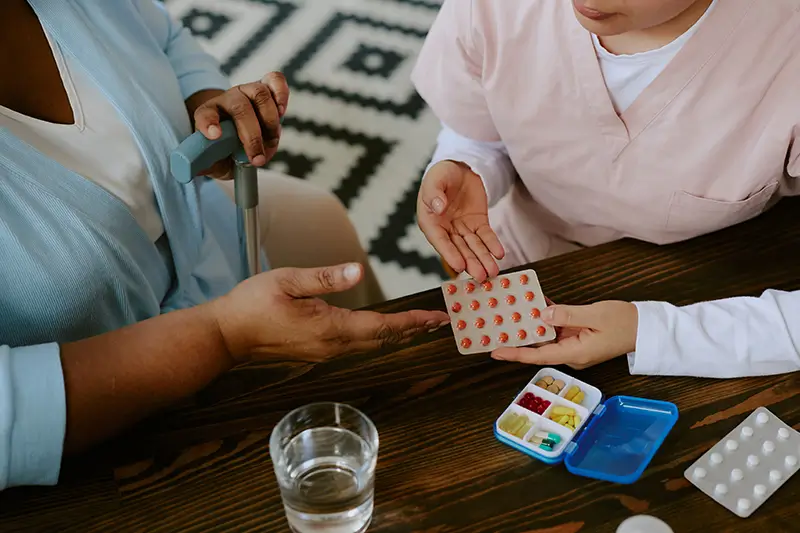
For many NDIS participants in Brisbane, a wound is not a one-off event. Reduced mobility, fragile skin, diabetes, poor circulation or a spinal cord injury mean wounds appear more easily and heal more slowly, and a wound that is not managed properly can end in an admission to the Princess Alexandra or Royal Brisbane and Women's Hospital that could have been avoided.
Home wound care from a registered nurse takes that risk seriously. Our wound care nurses in Brisbane come to your home, in-home care setting or SIL house, assess the wound and the reasons behind it, put a dressing plan in place and visit as often as the wound needs. Every visit is documented, measured and photographed, so healing is judged on evidence. If you are looking for a wound care nurse in Brisbane who will treat the wound as part of your whole health picture rather than a dressing to be changed, that is what we do.
Our Brisbane wound care service covers the wounds most often seen in NDIS participants, from routine to complex.
From early-stage redness over the sacrum or heels to established injuries, we stage the wound, manage moisture and infection, arrange pressure-relieving equipment and train carers so the injury heals and does not return.
After discharge from a Brisbane hospital, we follow the surgeon's instructions, watch for infection and wound breakdown, and report progress so follow-up appointments are informed.
Venous ulcers, arterial ulcers and diabetic foot wounds need the right dressings, sometimes compression, and attention to circulation and blood glucose. These are slow wounds, and regular visits are what gets them closed.
Wounds that have stalled, wounds needing negative pressure therapy, skin tears in fragile skin and burns. When a wound needs a specialist, we arrange the referral through your GP and carry out the specialist's plan at home.
Wound management in Brisbane starts with an assessment, not a dressing. The nurse examines the wound bed and the surrounding skin, checks for infection, asks about pain, nutrition, medications and circulation, and records the wound's size and appearance with your permission.
From that assessment comes a written dressing plan: which products, how often, what carers can do between visits and the signs that mean you should call. Each visit the wound is cleaned, measured, photographed and redressed, and the plan is adjusted if the wound has changed. Your GP receives regular progress notes, and any deterioration is reported the same day rather than at the next scheduled review. Where you also attend a Metro North or Metro South wound clinic, we coordinate with the clinic so treatment is consistent.
Wound treatment nurses in Brisbane also teach. Carers and support workers learn to keep dressings intact, spot early infection and reposition correctly, because what happens between visits matters as much as the visits themselves.
Pressure injury care in Brisbane is only half the job. The other half is prevention, and for participants who use a wheelchair or spend long periods in bed it is built into every nursing visit.
Our wound care nursing service covers Brisbane City Council's area. Nurses are rostered from your side of the city so that visit times are reliable, and our office at Darra is available for participants in the western suburbs who prefer to be seen there.
North: Chermside, Aspley, Stafford, Nundah, Sandgate
South: Mt Gravatt, Sunnybank, Carindale, Runcorn
Inner: West End, New Farm, Woolloongabba, Kelvin Grove
West: Indooroopilly, Toowong, Kenmore, Jindalee, Inala
East: Wynnum, Manly, Bulimba, Cannon Hill
Wound care is part of our community nursing service in Brisbane. Participants with wounds that sit alongside other complex needs may be supported through our high intensity supports service, and our article on what your nurse does during wound care at home explains a typical visit. The wound care overview covers the service across South East Queensland.
NDIS wound care in Brisbane is generally funded from your Core budget as a disability-related health support, where the wound is a consequence of your disability, and dressings and other consumables can usually be claimed the same way. Wound care for an acute health condition unrelated to your disability, such as a hospital outpatient dressing clinic after surgery, usually sits with Medicare and the hospital. Some participants use both, and we help you work out which applies.
If wound care is not yet in your plan, your GP or specialist can provide the evidence for a review, our nurses can write the clinical report and a Brisbane support coordinator can help you make the request.
It depends on the wound. A new surgical wound or an infected wound may need daily or second-daily dressing changes, while a stable chronic wound might be seen twice a week. The nurse sets the frequency after the first assessment, writes it into your plan and adjusts it as the wound changes.
Usually, yes, where wound care is funded in your plan as a disability-related health support. Dressings and consumables are claimed from Core alongside the nursing. Wounds unrelated to your disability may be covered by Medicare or the hospital instead, and we tell you which applies before ordering anything.
Yes. Pressure injuries are among the most common wounds our Brisbane nurses manage at home. Care includes staging and measuring the injury, choosing the right dressing, managing moisture and infection, arranging pressure-relieving equipment and training carers in repositioning and skin checks.
Yes. Your GP receives regular progress notes with measurements and, with your consent, photographs. If the wound deteriorates or stalls, we contact your GP straight away to arrange a review, a swab or a specialist referral.
We escalate rather than continue with the same plan. That can mean changing the dressing products, reviewing nutrition, diabetes control, circulation or medications, arranging a swab for infection, or referring you through your GP to a wound specialist or vascular clinic. Because the wound is measured at every visit, a stalled wound is picked up early.