
Medication management in the Redlands, on the mainland and the bay islands, for NDIS participants. MediHealth Connect registered nurses and trained support workers keep your chart accurate, check your Webster pack against it, give injections at home and work with your GP and pharmacist so that medicines are right even when the pharmacy is a ferry ride away.
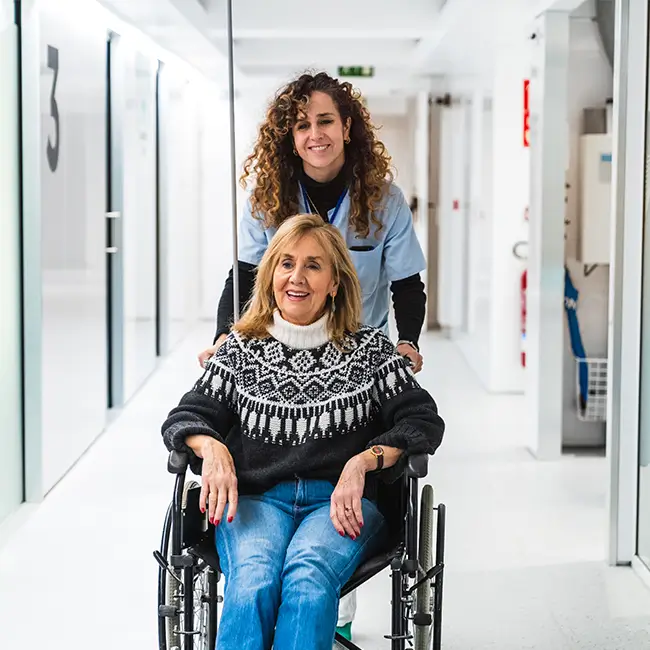
Medication has a logistics problem in the Redlands that it does not have in most of Brisbane. On Russell, Macleay or Coochiemudlo Island, a Webster pack comes across on the barge, a script change made at Redland Hospital has to reach a mainland pharmacy, and a missed delivery can mean a missed dose. Add a support worker who is unsure whether the new pack includes last week's changes, and the ordinary risks of a complex regime get sharper.
NDIS medication support in the Redlands is our answer to that. A registered nurse holds one accurate chart, checks each pack against it as it arrives, trains and supervises the workers who administer, and keeps your GP and pharmacist informed of each other's changes. Supply is planned ahead for island participants so the barge timetable does not decide when you get your medicine. The support can be as light as a prompt or as thorough as full nursing management; the checks behind it do not change.
When a Redlands family asks for "help with medication", the first thing our nurse does is work out which of three services they actually need, because the law treats them differently. Queensland's Medicines and Poisons Act 2019 says who may handle which medicines, and the NDIS Practice Standards say what a provider must have in place before its staff touch them.
At the simplest level, assistance, the participant runs their own medicines and the worker is a reminder and an extra pair of hands: a prompt at the right time, help with a fiddly blister, a note on the chart. One step up, administration, the worker or nurse gives the dose and signs for it. Our support workers may do that from a Webster pack after training and a competency check, but anything injected, anything that calls for a clinical judgement and most Schedule 8 medicines are given by a registered nurse. At the top, nursing medication management, a registered nurse takes on the regime as a whole: what is prescribed and why, what to watch for, whether the chart is right, and when to ask the GP or pharmacist to look again.
Packs, prompts and the barge. We talk to your pharmacy, whether it is in Cleveland, Capalaba or on the island, so that each Webster pack reflects the scripts as they stand today. When the pack arrives, and on the islands that means when the barge arrives, the nurse or worker checks it against the chart before the first dose comes out of it. From there we either prompt you or administer, depending on what your plan funds.
Everyday medicines and PRNs. Tablets and liquids, creams and patches, drops, inhalers and suppositories are all administered and charted. As-needed medicines are the ones most often given wrongly in the community, so every worker on a Redlands roster is trained on the prescriber's written criteria for each PRN before they start.
Injections. Insulin, anticoagulants, depot antipsychotics and other injectables are given by a registered nurse, at home and on the islands, with the dose checked against the prescription and blood glucose recorded where it matters. Participants who want to self-inject, and carers who want to help, can be taught.
The chart and the reviews. There is one chart, and it is reconciled against the discharge summary after every stay at Redland Hospital or a Brisbane hospital. When the nurse spots two medicines doing the same job, a likely interaction or a medicine nobody can explain, they ask your GP and pharmacist for a review rather than leaving it.
Our Redlands medication management service runs on a handful of rules that are easy to state and hard to skip.
The chart is the truth, and it is updated the day a script changes and checked against every hospital discharge summary before the next dose. Nobody administers a medicine until they have been trained, assessed as competent and placed under nurse supervision. A missed, late, refused or wrong dose is written up as an incident and someone finds the cause. The pharmacist hears from us about discrepancies, supply problems and Home Medicines Reviews, and for island participants that conversation includes delivery dates. The GP hears about side effects, interactions and changes in your condition when they are noticed, not at the next appointment.
Our medication management services cover Redland City, on the mainland and on the Southern Moreton Bay Islands and North Stradbroke Island. Island rosters are built around the ferry timetable and medication supply is planned ahead so doses are not missed.
Cleveland and north: Cleveland, Ormiston, Wellington Point, Birkdale, Alexandra Hills
Central and south: Capalaba, Thornlands, Victoria Point, Redland Bay, Mount Cotton
Bay Islands: North Stradbroke Island (Dunwich), Coochiemudlo, Macleay, Russell
West: Sheldon, Thorneside
Medication support is part of our community nursing service in the Redlands. Where medication is one element of complex care, such as PEG administration or seizure rescue medication, see our Redlands high intensity supports. Our guide to NDIS medication management covers the basics, and the medication management overview covers South East Queensland.
Support worker prompting and administration are usually funded from your Core budget as part of daily living supports. Nursing medication management in the Redlands is funded from Core as a disability-related health support when the need relates to your disability. The medicines themselves are a PBS and Medicare cost, not an NDIS one.
If medication support is not in your plan, the NDIA will want your GP's evidence about your regime and the risks of error, together with a nursing assessment, which we can provide. A Redlands support coordinator can help you request a review or variation.
For medicines in a Webster pack or similar aid, usually yes, once the worker has completed our medication training and competency assessment, we hold a current chart for you and the task is covered by our medication policy. Injections, medicines that need a clinical decision and most Schedule 8 medicines are administered by a registered nurse.
The pharmacy fills the pack. Our nurses check it against your current scripts and your chart when it arrives, which matters on the islands where packs travel by barge, administer from it, and contact the pharmacy and your GP the same day if anything does not match.
Yes, on the mainland and on the bay islands. Registered nurses administer subcutaneous and intramuscular injections at home, including insulin, anticoagulants and depot medications, as prescribed. If self-injection is a goal, we can train you or a carer to do it safely.
It is recorded, the prescriber's or pharmacist's advice for that medicine is followed, and you and your GP are told if it matters clinically. The missed dose is logged as a medication incident and reviewed so the cause, which on the islands is sometimes a supply problem, is fixed.
Yes, where the need comes from your disability. Support worker assistance and administration are generally funded from Core as daily living supports, and nursing medication management from Core as a disability-related health support. The medicines themselves are covered by the PBS and Medicare.