
Finding an NDIS provider with capacity, the right skills and coverage of your suburb is most of the work of support coordination. This guide explains how a coordinator does it and what you should expect from the process.
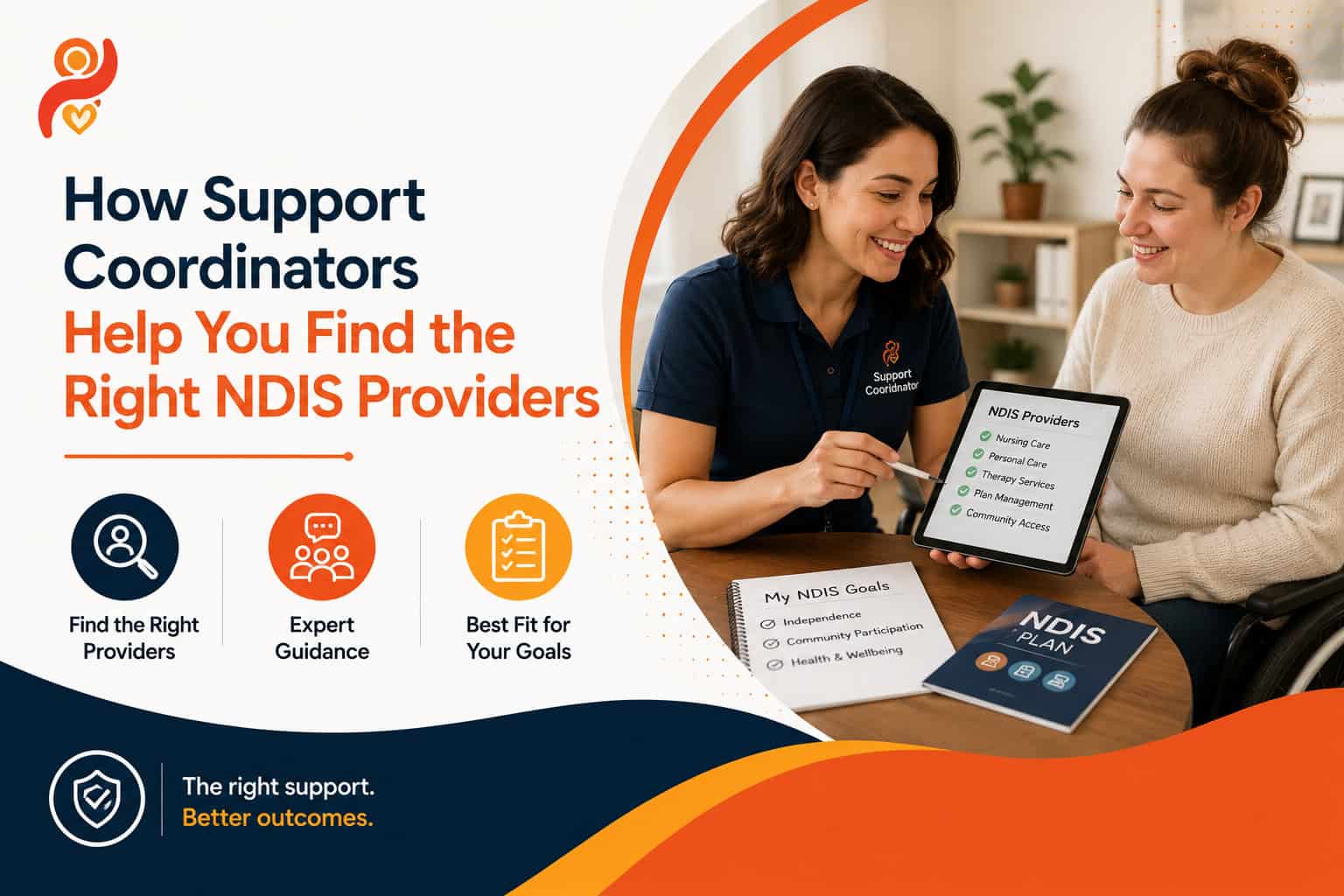
Anyone can find a list of NDIS providers. Finding one that has a vacancy, is good with your needs, covers your area and will still be there in six months is a different job, and it is the one support coordinators spend most of their time on. MediHealth Connect offers support coordination across South East Queensland, and this is how our coordinators approach the search.
The search starts with what you actually need: the type of support, the skills involved, the hours and times, the location, any language or cultural requirements, and the personal fit that matters for someone who will be in your home. A coordinator who starts from the provider directory ends up matching you to whoever has a vacancy; a coordinator who starts from your needs ends up matching you to someone who will last.
If your plan is NDIA-managed you can only use registered providers. If it is plan-managed or self-managed you can also use unregistered providers, which opens up sole traders, small businesses and private clinicians. A coordinator explains this before the search so that you are not shown providers you cannot use, and checks that any unregistered provider meets their obligations.
The most useful thing a coordinator brings is current knowledge: which providers in Logan have room this month, which therapy practices on the Gold Coast are taking new participants, which support worker agencies actually roster staff in Ipswich's rural west. That knowledge goes stale quickly, which is why a coordinator who works your region every week is worth more than one working from a spreadsheet.
Once there is a shortlist, the coordinator contacts the providers, describes your needs, confirms capacity and arranges the first meetings. They read the service agreements with you, check the rates against the NDIS price limits and make sure the agreement says how to end it. After services start, they follow up to see whether the match is working.
Some coordination providers, MediHealth Connect included, deliver other supports such as community nursing. That creates a conflict of interest, and the NDIS requires it to be managed: you must be offered a choice, the reasons for any referral must be documented, and no service may be a condition of another. Ask any coordinator how they handle it. A good answer is specific.
For common supports in well-served areas, days. For specialist therapies, complex care or outer suburbs, weeks, because the constraint is provider capacity rather than the search. A coordinator tells you where the waits are and looks at alternatives such as telehealth in the meantime.
Yes. Many participants find some providers themselves and use the coordinator for the harder searches and for keeping everything working together.
Tell your coordinator. They raise it with the provider, and if it is not fixed they help you change, including giving notice under the agreement and arranging a handover.
MediHealth Connect provides support coordination across South East Queensland.