
When a participant is living with a life-limiting condition, the NDIS and the health system share responsibility for their care. This guide explains what palliative nursing at home involves, which parts the NDIS funds, and how the two systems are meant to work together.
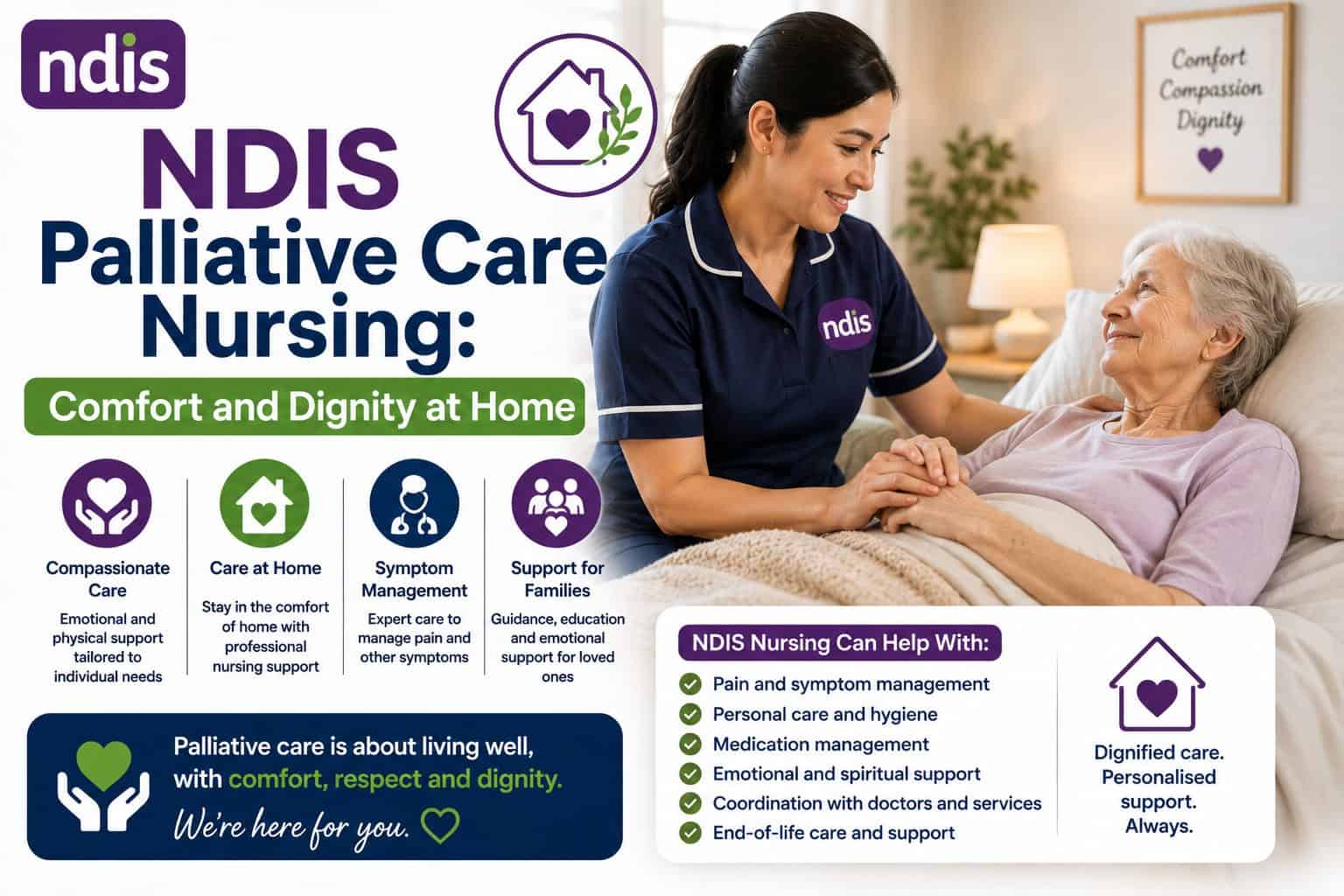
Palliative care is about comfort, dignity and quality of life for a person with a life-limiting illness, and about support for the people close to them. For an NDIS participant it raises a practical question that families often find nobody will answer plainly: who funds what? The NDIS continues to fund disability-related supports, including nursing that relates to the disability, while the health system funds treatment of the illness and specialist palliative care. In the home, those two things overlap constantly. MediHealth Connect provides NDIS community nursing, and this guide explains how palliative nursing fits within it.
Day to day, palliative nursing at home is much the same skilled care a community nurse provides at any other time, applied with a different goal. Symptom management comes first: pain, breathlessness, nausea, constipation, agitation and skin integrity are monitored and reported to the treating team so that medicines can be adjusted quickly. Pressure injury prevention becomes more important as mobility falls. Medication administration, including subcutaneous medicines via a syringe driver where prescribed, is done and documented by a registered nurse.
Just as important is the coordination. A participant at the end of life may have a GP, a specialist palliative care service, a hospital team, NDIS support workers and family carers all involved. The community nurse keeps everybody working from the same care plan, makes sure changes reach the people on the roster and helps the family understand what to expect.
The NDIS funds supports that relate to the participant's disability: personal care, support workers, equipment and community nursing for disability-related needs, and these continue during palliative care. Specialist palliative care, medical treatment, medicines for the illness and hospital or hospice admission are funded by Queensland Health and Medicare. The line is not always clean. A nurse who was visiting for wound care before the diagnosis will keep visiting, and will often be the person who notices a change and calls the palliative care team.
Where a participant's needs increase quickly, the NDIS can be asked for an urgent plan variation to increase nursing or support worker hours. Specialist palliative care services in South East Queensland, through Metro North, Metro South, West Moreton and Gold Coast Health, provide the clinical oversight and after-hours advice, and our nurses work under their direction for the palliative aspects of care.
Palliative care goes better when it is discussed early. Advance care planning, including an Advance Health Directive and the appointment of an enduring power of attorney, records what the participant wants if they lose the ability to decide. A written care plan agreed between the palliative care team, the GP, the family and the NDIS providers sets out who to call for what, including overnight. Equipment such as a pressure mattress or hospital bed is easier to arrange before it is urgent.
Support coordinators play a large role here. They can request the plan variation, arrange the extra hours, coordinate with the palliative care service and keep the NDIA informed. Our life stage and transition support page describes that coordination.
Carers of a person receiving palliative care at home are doing demanding work, usually without training. A community nurse teaches the practical skills, from repositioning to mouth care to recognising when a symptom needs a call, and provides a point of contact when something is worrying. Respite, whether through the NDIS plan or through the palliative care service, is worth arranging before the carer is exhausted rather than after.
Partly. The NDIS keeps funding disability-related supports, including community nursing for disability-related needs and personal care, during palliative care. Specialist palliative care, medical treatment and hospice or hospital care are funded by the health system. Our nurses help families understand which is which.
Overnight nursing or support worker shifts can be funded in an NDIS plan where the need relates to the disability, and specialist palliative care services provide after-hours advice. Whether overnight nursing can be staffed depends on your area, so ask early and we will tell you plainly what we can commit to.
Your care plan should list this: the specialist palliative care service's after-hours line for symptom crises, your community nurse during service hours, and 000 for emergencies. Having the numbers written on the fridge sounds simple, but it removes a lot of anxiety at 2am.
MediHealth Connect provides community nursing across South East Queensland.