
Not all nursing care is created equal. When your medical needs involve clinical procedures that carry genuine risk, tracheostomy management, ventilator ca
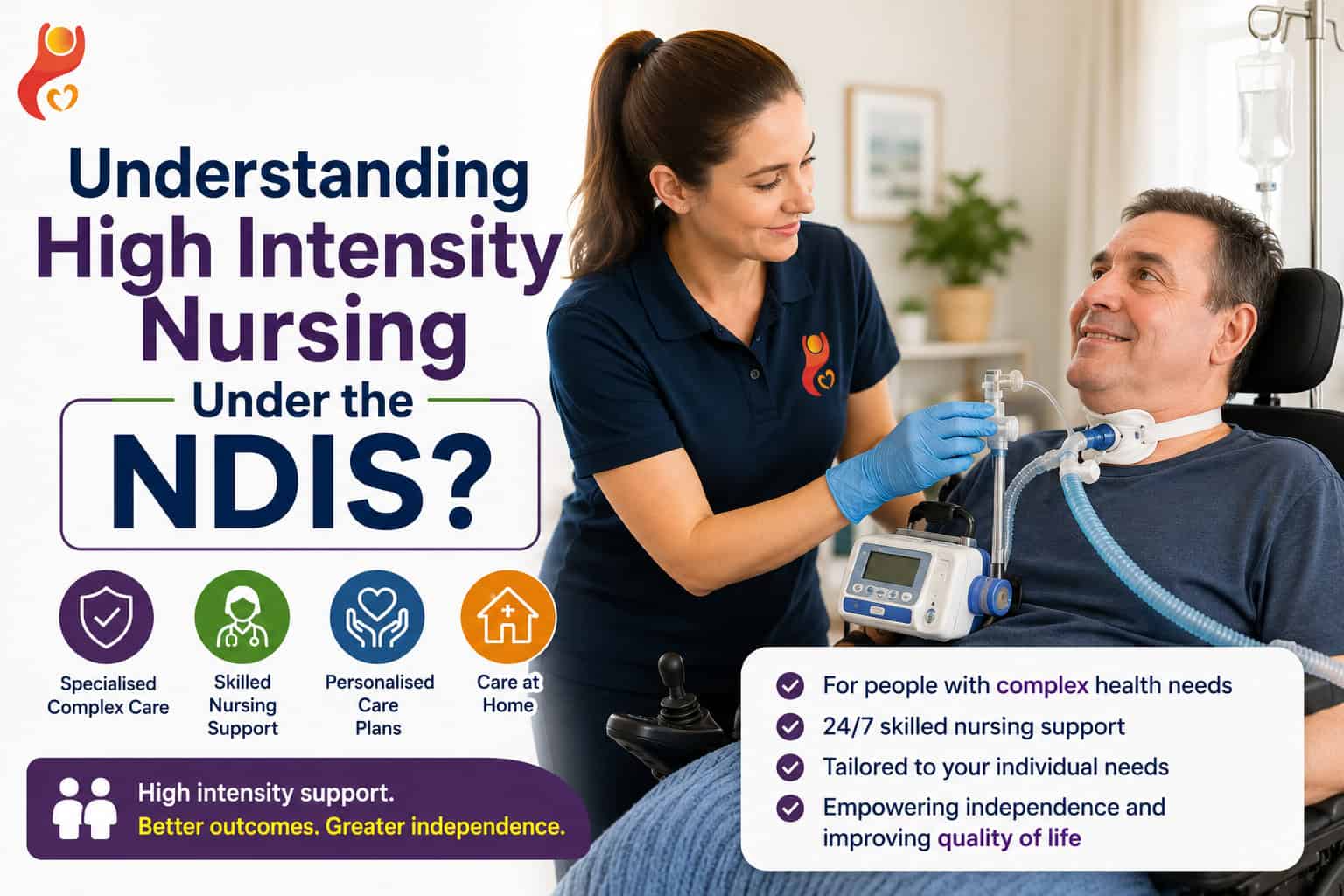
Not all nursing care is created equal. When your medical needs involve clinical procedures that carry genuine risk, tracheostomy management, ventilator care, seizure response, complex bowel programs, you're in the territory of high intensity nursing. It's a specific category under the NDIS, and understanding how it works can make the difference between getting the care you need and going without. For the practical details of how the service works, see complex care nursing at home.
The NDIS classifies nursing as high intensity when the procedures involved carry a higher level of clinical risk and require nurses with specialised training beyond general registration. This isn't about how often you need a nurse, it's about the complexity of what they're doing.
High intensity nursing includes tracheostomy care and suctioning, ventilator and respiratory equipment management, seizure management with emergency medication administration, complex bowel care programs, PEG feeding and enteral nutrition, and complex wound management requiring negative pressure therapy or specialised interventions.
These are tasks where getting it wrong has serious consequences. That's why the NDIS requires providers delivering high intensity nursing to hold specific registration and ensure their nurses have completed additional competency assessments.
High intensity daily personal activities are funded in your NDIS plan under Core Supports (Assistance with Daily Life) at the high intensity price limits, with the nursing component funded as a disability-related health support, also in Core. The NDIS Price Guide allows higher hourly rates for high intensity nursing, reflecting the additional qualifications and training required.
If your needs have become more complex since your last plan, you can request a plan review. Your treating specialist, GP, or hospital team will need to provide evidence of your complex care requirements.
Not every NDIS provider can deliver high intensity nursing. When you're looking for a provider, check their registration covers high intensity supports, ask about their nurses' specific competencies and experience, find out how they handle after-hours emergencies, and ask about their clinical governance and escalation procedures.
At MediHealth Connect, our high intensity nursing team undergoes regular competency reviews and follows strict clinical protocols. We don't assign high intensity cases to nurses who haven't been assessed for those specific tasks.
Both. A registered nurse assesses, writes the plan and performs the nurse-only tasks. Support workers deliver the delegated tasks after the nurse has trained them on you specifically, assessed their competence and set up supervision. The plan states which tasks are which.
A set of standards published by the NDIS Commission that describe what a worker must know and be able to do before performing each high intensity procedure: complex bowel care, enteral feeding, dysphagia management, tracheostomy care, ventilation, catheter care, subcutaneous injections, complex wound care, diabetes management and seizure management.
MediHealth Connect delivers them across South East Queensland; see our high intensity supports page and its regional pages. Overnight and 24-hour rosters depend on staffing in your area, and we confirm what we can commit to before any agreement is signed.
MediHealth Connect provides community nursing across South East Queensland.