
Bladder and bowel control issues affect more NDIS participants than most people realise, and they're nothing to feel uncomfortable talking about. Proper as
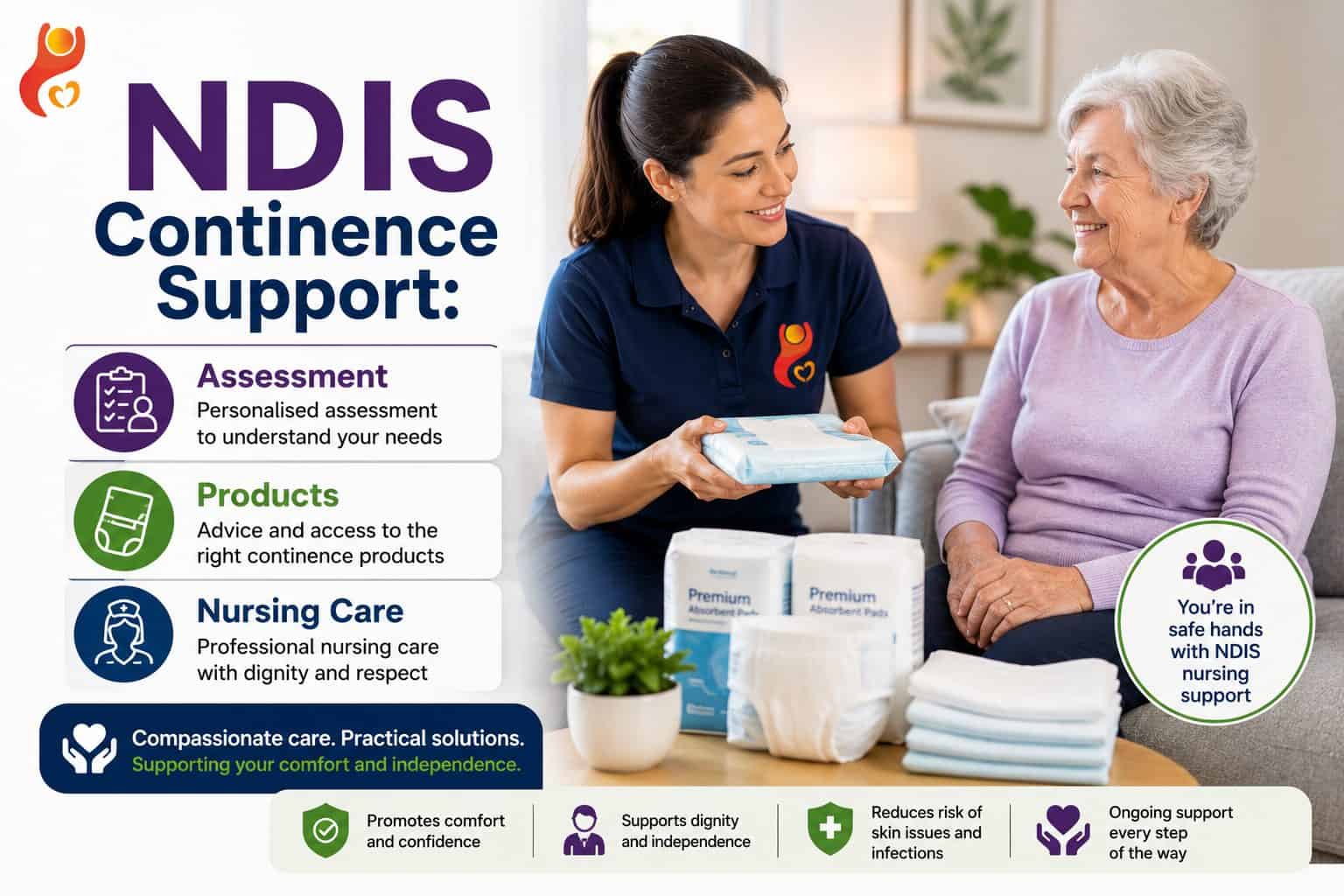
Bladder and bowel control issues affect more NDIS participants than most people realise, and they're nothing to feel uncomfortable talking about. Proper assessment and management can dramatically improve your quality of life, reducing accidents, improving comfort, and giving you more confidence to get out and participate in your community. MediHealth Connect offers community nursing care at home, and the points below apply whichever provider you choose.
A continence assessment carried out by a registered nurse covers your bladder and bowel history, fluid intake and diet, current symptoms and their frequency, any medications that might affect continence, your mobility and access to toileting facilities, and your emotional wellbeing related to continence issues.
The assessment is thorough but respectful. Your nurse has seen it all before and approaches continence with the same professionalism as any other clinical need.
Based on the assessment, your nurse develops a continence management plan. This might include recommendations for appropriate continence products, pads, pull-ups, catheters, or other aids. It could involve pelvic floor exercises or bladder training techniques, dietary adjustments, medication review with your GP, and referral to a continence specialist for complex cases.
Continence products may be funded through your NDIS plan as consumables in your Core budget, or in some cases through the Queensland Medical Aids Subsidy Scheme (MASS). There is no separate NDIS continence scheme; your nurse can tell you which pathway applies to you. Your nurse can guide you through the available funding pathways.
Continence management isn't a one-off assessment. Your nurse monitors your continence over time, adjusts the management plan as needed, and provides ongoing support and education. For participants with catheters, regular catheter care and changes are part of the community nursing service.
At MediHealth Connect, we provide continence assessment and management as part of our community nursing service across South East Queensland. Our nurses are experienced in this area and approach it with sensitivity and respect.
Yes, where the continence issue is related to your disability. The assessment is part of community nursing, funded from your Core budget as a disability-related health support, and the resulting products are usually claimed as consumables.
A registered nurse can carry out a continence assessment and write a management plan. Complex cases, such as neurogenic bladder or bowel after spinal cord injury, are referred to a continence nurse specialist, urologist or gastroenterologist, and the community nurse carries out their recommendations at home.
Often they can. Timed toileting, fluid and diet changes, pelvic floor work, a medication review and treating constipation all make a difference for many participants. Products are part of the plan, not the whole of it.
MediHealth Connect provides community nursing across South East Queensland.