
Not all nursing care is created equal. When your medical needs involve clinical procedures that carry genuine risk — tracheostomy management, ventilator ca
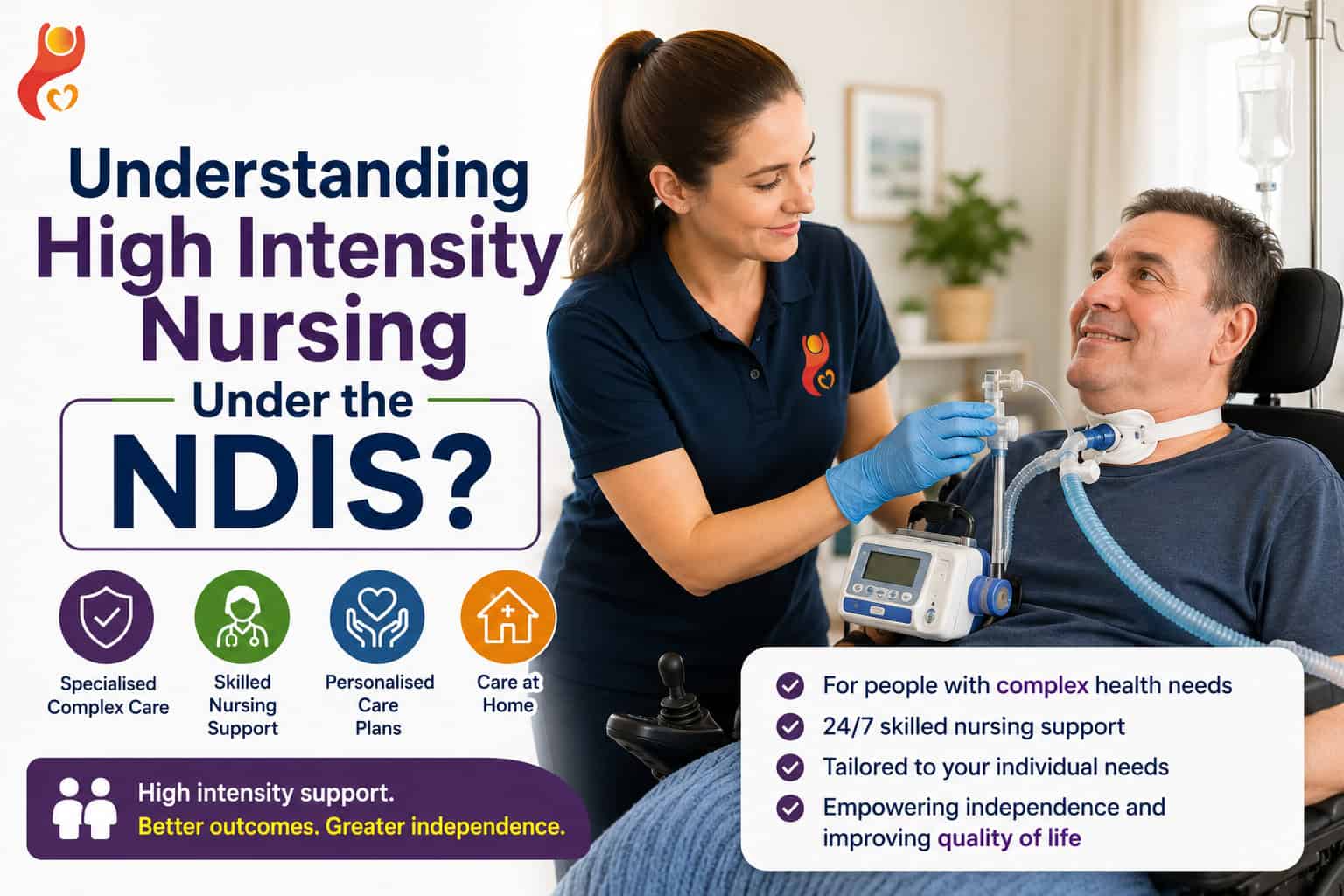
Not all nursing care is created equal. When your medical needs involve clinical procedures that carry genuine risk — tracheostomy management, ventilator care, seizure response, complex bowel programs — you're in the territory of high intensity nursing. It's a specific category under the NDIS, and understanding how it works can make the difference between getting the care you need and going without.
The NDIS classifies nursing as high intensity when the procedures involved carry a higher level of clinical risk and require nurses with specialised training beyond general registration. This isn't about how often you need a nurse — it's about the complexity of what they're doing.
High intensity nursing includes tracheostomy care and suctioning, ventilator and respiratory equipment management, seizure management with emergency medication administration, complex bowel care programs, PEG feeding and enteral nutrition, and complex wound management requiring negative pressure therapy or specialised interventions.
These are tasks where getting it wrong has serious consequences. That's why the NDIS requires providers delivering high intensity nursing to hold specific registration and ensure their nurses have completed additional competency assessments.
High intensity nursing can appear in your NDIS plan under Core Supports (Assistance with Daily Life) at a higher intensity level, or under Capacity Building (Improved Health and Wellbeing). The NDIS Price Guide allows higher hourly rates for high intensity nursing, reflecting the additional qualifications and training required.
If your needs have become more complex since your last plan, you can request a plan review. Your treating specialist, GP, or hospital team will need to provide evidence of your complex care requirements.
Not every NDIS provider can deliver high intensity nursing. When you're looking for a provider, check their registration covers high intensity supports, ask about their nurses' specific competencies and experience, find out how they handle after-hours emergencies, and ask about their clinical governance and escalation procedures.
At MediHealth Connect, our high intensity nursing team undergoes regular competency reviews and follows strict clinical protocols. We don't assign high intensity cases to nurses who haven't been assessed for those specific tasks.
Yes. Community nursing is funded under the Capacity Building section of your NDIS plan, specifically under Improved Health and Wellbeing. The amount of funding depends on your assessed needs and the complexity of care required.
Look for NDIS registration, AHPRA-registered nurses, local presence in your area, and a track record of consistent service. Ask about their experience with your specific health needs and how they handle communication with your broader care team.
Yes. Under the NDIS, you can switch providers at any time. There is no lock-in period. A professional provider will facilitate a smooth handover to your new service.
Making the most of your community nursing service comes down to a few practical habits. Keep a list of questions or concerns between visits so you don't forget to raise them when your nurse arrives. If you notice changes in your health — new symptoms, worsening of existing conditions, or side effects from medications — don't wait for the next scheduled visit. Call your provider and let them know.
Stay engaged with your care plan. Your nurse should share it with you and explain what each intervention is for. If you don't understand something, ask. The plan is there to serve you, not to sit in a folder.
Make sure your support coordinator, GP, and community nurse are all in communication. Gaps in communication are where things go wrong — a medication change that doesn't get passed on, a specialist recommendation that nobody follows up on. At MediHealth Connect, we proactively coordinate with your care team because we know how important it is.
Keep your NDIS plan accessible. Your nurse may need to reference it to confirm funding categories or check what services are covered. Having a copy at home saves time and avoids confusion.
When evaluating community nursing providers, the fundamentals matter more than marketing. Are the nurses AHPRA registered? Does the provider hold NDIS registration for the relevant support categories? Do they have experience with your specific clinical needs?
Beyond qualifications, ask about consistency. Will you see the same nurse regularly, or will different staff turn up each time? Consistency of care is one of the strongest predictors of good outcomes in community nursing — your nurse gets to know your baseline, your preferences, and your routine.
Ask about their communication practices. Do they send reports to your GP after each visit? Do they communicate with your support coordinator? Can you reach them by phone between scheduled visits if something urgent comes up?
MediHealth Connect provides community nursing across South East Queensland.