
Living with a chronic condition alongside disability creates a layer of complexity that standard healthcare doesn't always address well. NDIS community nur
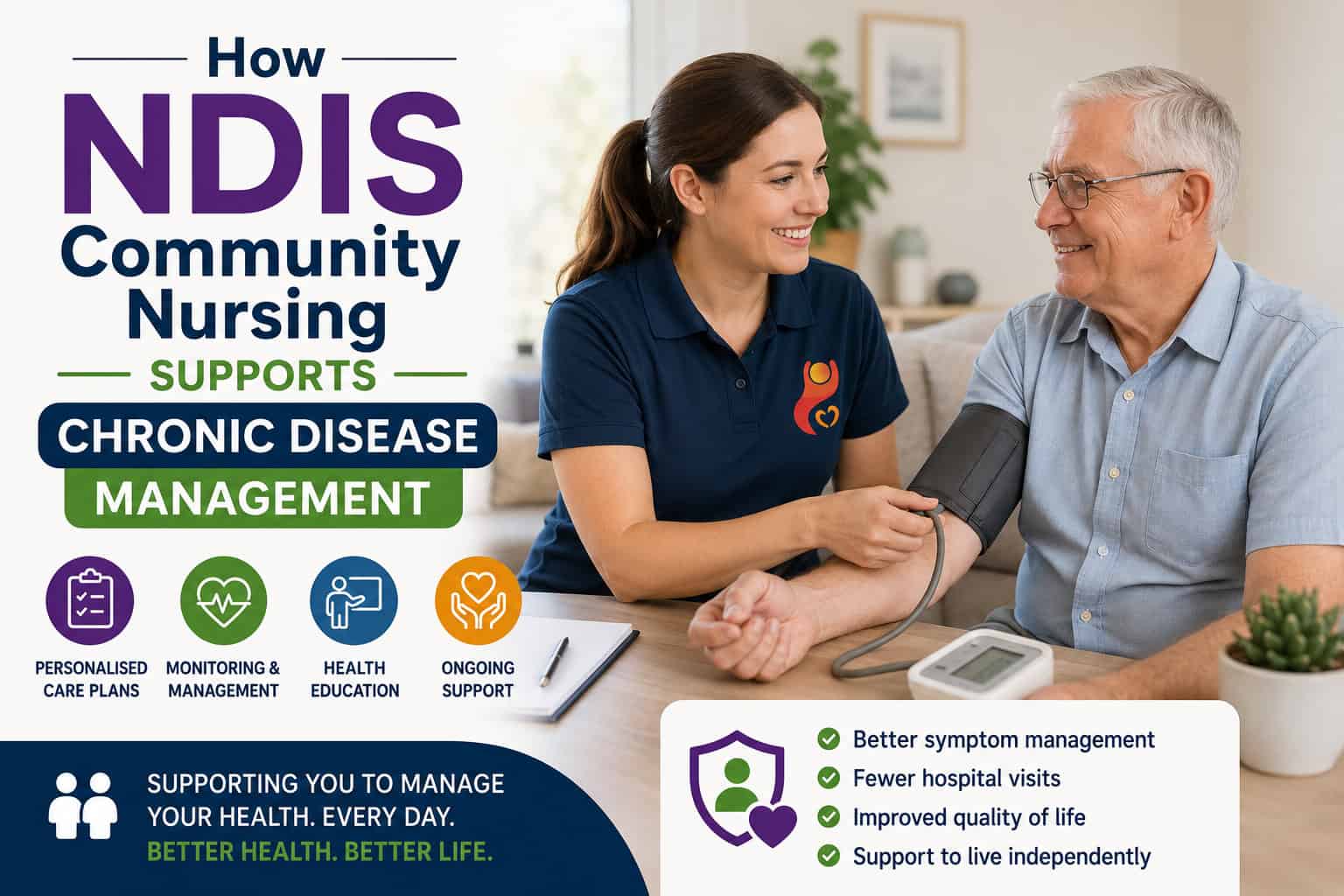
Living with a chronic condition alongside disability creates a layer of complexity that standard healthcare doesn't always address well. NDIS community nursing fills that gap — providing regular, skilled nursing care that monitors your condition, manages your medications, and catches problems before they escalate into hospital admissions.
NDIS community nursing supports participants managing a range of ongoing health conditions. The most common include diabetes — monitoring blood glucose, administering insulin, managing diet-related complications, and coordinating with endocrinologists. Respiratory conditions like COPD and asthma require regular monitoring, inhaler technique review, and oxygen therapy management. Cardiovascular disease involves blood pressure tracking, medication oversight, and symptom monitoring. Epilepsy management includes seizure tracking, emergency medication protocols, and communication with neurologists.
This is an area where consistent, skilled nursing care makes a measurable difference. When your nurse sees you regularly, they build a clinical picture of what's normal for you. They can identify changes early, adjust the care plan proactively, and coordinate with your GP or specialist before small issues become serious problems.
The value of community nursing for chronic disease isn't in any single visit — it's in the pattern. When a nurse sees you regularly, they establish what's normal for you. They know your typical blood pressure range, your usual energy levels, your baseline symptoms. When something shifts, they notice.
This early detection is what keeps people out of emergency departments. A slight change in wound appearance, a creeping blood glucose trend, a new pattern of breathlessness — these are the things a regular nurse catches that might otherwise go unnoticed until they become a crisis.
Your community nurse doesn't work in isolation. They communicate with your GP, specialists, pharmacist, and support coordinator to make sure everyone is on the same page. If your specialist changes a medication, your nurse knows about it. If your nurse notices a concerning trend, your GP hears about it.
At MediHealth Connect, this coordination happens as a standard part of our service. We don't wait to be asked — we proactively communicate with your treating team because that's how good chronic disease management works.
Community nursing for chronic disease management is funded under the Capacity Building section of your NDIS plan. If it's not currently in your plan, you can request a plan review. Your GP will need to provide evidence of your chronic condition and explain why ongoing community nursing is reasonable and necessary in relation to your disability.
This is an area where consistent, skilled nursing care makes a measurable difference. When your nurse sees you regularly, they build a clinical picture of what's normal for you. They can identify changes early, adjust the care plan proactively, and coordinate with your GP or specialist before small issues become serious problems.
Yes, when the chronic condition is related to or exacerbated by your disability. Your GP can provide evidence to support inclusion in your plan.
Frequency depends on your condition and stability. Some participants need weekly visits, others fortnightly. Your nurse adjusts the schedule based on your clinical needs.
This is an area where consistent, skilled nursing care makes a measurable difference. When your nurse sees you regularly, they build a clinical picture of what's normal for you. They can identify changes early, adjust the care plan proactively, and coordinate with your GP or specialist before small issues become serious problems.
MediHealth Connect provides community nursing across South East Queensland.