
If you've just had community nursing added to your NDIS plan, you probably have questions about what happens next. The first visit sets the tone for everyt
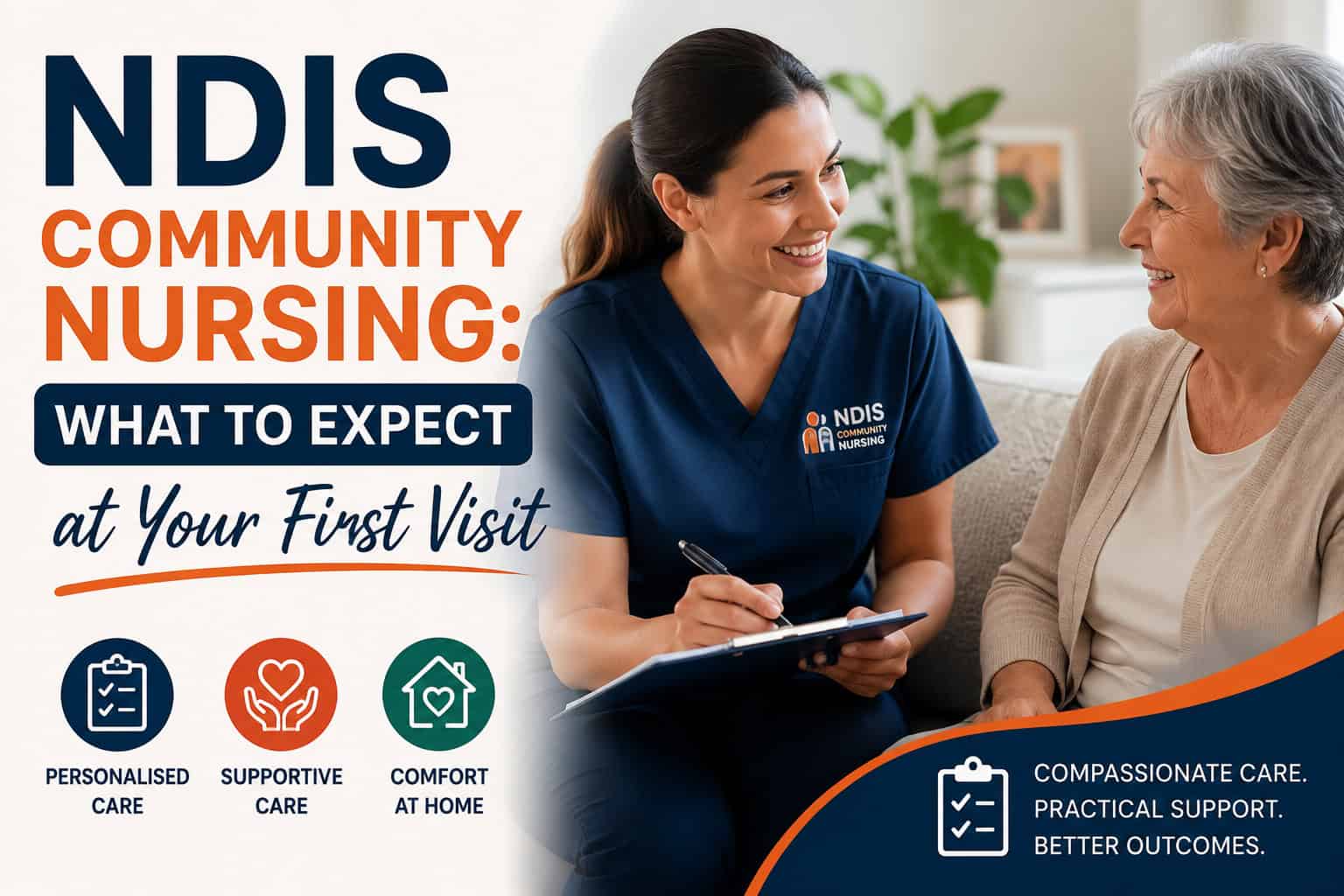
If you've just had community nursing added to your NDIS plan, you probably have questions about what happens next. The first visit sets the tone for everything that follows, so it helps to know what your nurse will be looking for, what they'll ask, and how the whole process works.
Your community nursing provider will contact you to schedule the initial visit. This usually happens at your home, though it can also take place in a supported living environment. Before the visit, gather any relevant medical documents — discharge summaries, medication lists, specialist letters, and your NDIS plan. Having these ready saves time and helps your nurse get a complete picture of your situation.
Let your provider know about any access requirements — whether that's a ramp, a specific entrance, or the need for someone else to be present during the visit.
The first visit is primarily an assessment. Your registered nurse will review your medical history and current health conditions, assess the specific nursing care you need, discuss your goals and what you want from the service, check your home environment for any clinical considerations, and talk through your NDIS funding and what it covers.
This isn't a rushed appointment. A thorough initial assessment typically takes 60 to 90 minutes. Your nurse needs to understand not just your clinical needs, but how those needs fit into your daily life.
Based on the assessment, your nurse develops a personalised care plan. This document outlines what nursing services you'll receive, how often visits will happen, what clinical procedures are involved, and how progress will be tracked. The care plan is shared with your GP, support coordinator, and anyone else involved in your care.
You should feel comfortable with the plan. If something doesn't feel right or you have concerns, raise them. The plan can be adjusted as your needs change.
Once the care plan is agreed, regular nursing visits begin. Your provider should assign you a consistent nurse wherever possible — someone who gets to know your situation and can spot changes early. At MediHealth Connect, we prioritise continuity because it leads to better outcomes and a more comfortable experience for participants across South East Queensland.
This is an area where consistent, skilled nursing care makes a measurable difference. When your nurse sees you regularly, they build a clinical picture of what's normal for you. They can identify changes early, adjust the care plan proactively, and coordinate with your GP or specialist before small issues become serious problems.
Gather your NDIS plan, medication list, and any recent medical letters. Let your provider know about access needs.
Absolutely. Many participants have a family member or carer present for the first visit, and that's encouraged.
You have the right to request a different nurse. A good provider will accommodate this without any hassle.
Making the most of your community nursing service comes down to a few practical habits. Keep a list of questions or concerns between visits so you don't forget to raise them when your nurse arrives. If you notice changes in your health — new symptoms, worsening of existing conditions, or side effects from medications — don't wait for the next scheduled visit. Call your provider and let them know.
Stay engaged with your care plan. Your nurse should share it with you and explain what each intervention is for. If you don't understand something, ask. The plan is there to serve you, not to sit in a folder.
Make sure your support coordinator, GP, and community nurse are all in communication. Gaps in communication are where things go wrong — a medication change that doesn't get passed on, a specialist recommendation that nobody follows up on. At MediHealth Connect, we proactively coordinate with your care team because we know how important it is.
Keep your NDIS plan accessible. Your nurse may need to reference it to confirm funding categories or check what services are covered. Having a copy at home saves time and avoids confusion.
When evaluating community nursing providers, the fundamentals matter more than marketing. Are the nurses AHPRA registered? Does the provider hold NDIS registration for the relevant support categories? Do they have experience with your specific clinical needs?
Beyond qualifications, ask about consistency. Will you see the same nurse regularly, or will different staff turn up each time? Consistency of care is one of the strongest predictors of good outcomes in community nursing — your nurse gets to know your baseline, your preferences, and your routine.
Ask about their communication practices. Do they send reports to your GP after each visit? Do they communicate with your support coordinator? Can you reach them by phone between scheduled visits if something urgent comes up?
MediHealth Connect provides community nursing across South East Queensland.